
Черно
Squid-ink sea.

He is six years old when he understands that water can be black. He stands on the shore and looks out. His mother finds a place to set the blanket. Черно, he hears. See.
In August the bus leaves Sofia before first light; he is already asleep against her arm. She counts the plums in the paper bag
– eight, nine, ten –
His breath slow against her skin. Out the window, sudden water.
In all his drawings the sea is black. Once, lightly, she said: grey? Green? He nodded. The next drawing was black. She kept them in a drawer with the photographs.
(Black water keeps the moonpath and the fishermen’s headlamps and his pale arms slicing in ahead of her each morning, before she had even set down their things – and once, a sheet of fish skin, and once, something she turned him away from, and now nothing, only black water and the sound of it.)
Every August, the same road. He sleeps through the inland dark and wakes to sand lilies and salt.
I remember my mother’s eyes against the sun. Her tobacco hair, the white sky.
She spreads the photographs. Черно море: blue, green, grey, blue.
Handfuls of her back into the black water.
She watches the dark pass and waits for the moment his body will know before hers does. The bus moves. The plums are between them. The sea is an unknown colour, still ahead.
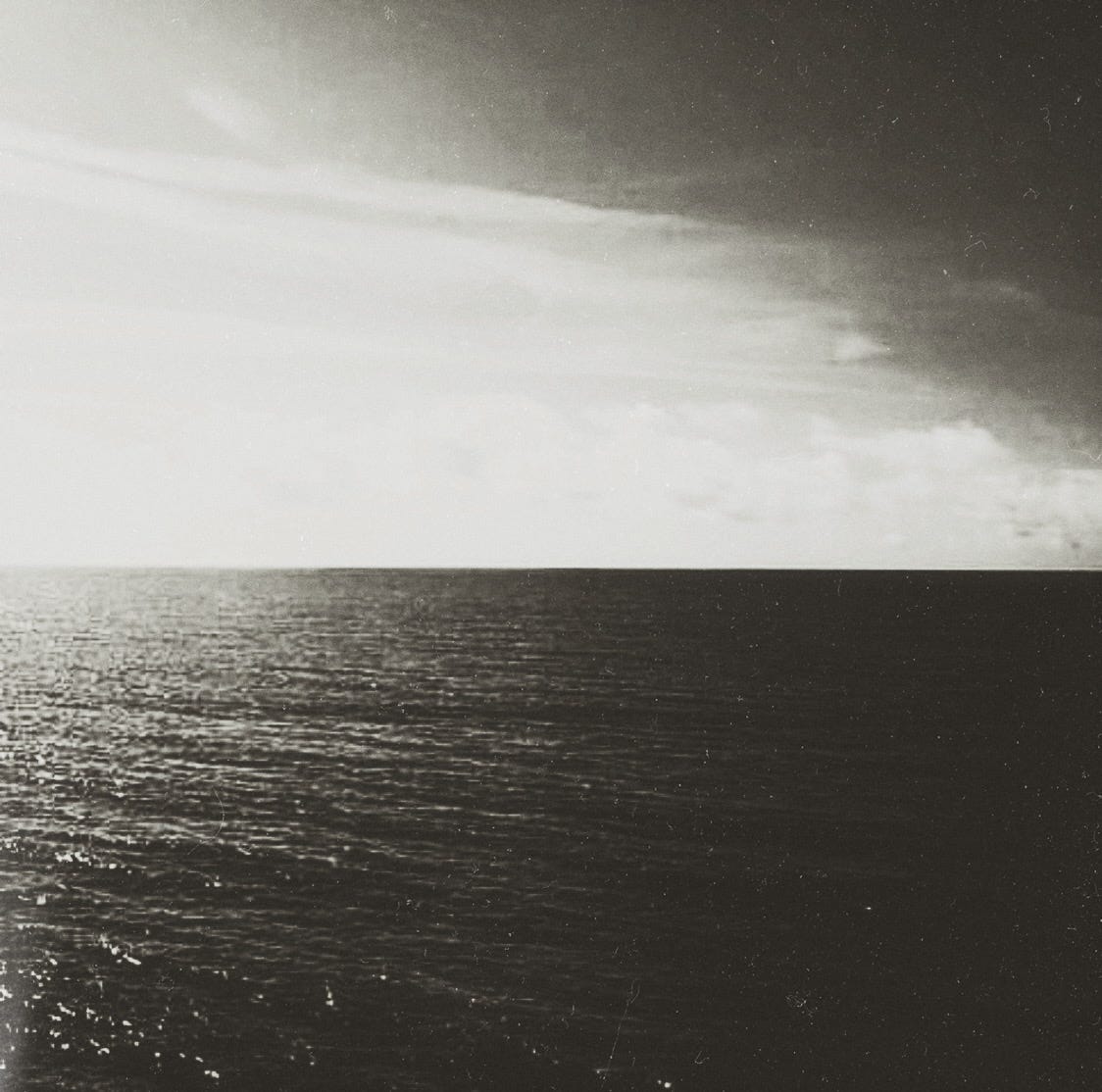
Photo: not the Black Sea, but the sea near where I live on a stormy day.
The beautiful thing about your writing is that I think all of us, as your readers, come away with different meanings--as if the piece is a Rorschach of sorts. Poetry in general invites this, as do paintings and other forms of art. But your writing seems to openly invite it, seems to encourage the reader to personalize it and be met with what they need in that alchemical, nourishing process of appreciating the creative materials of the artist.
And in this Rorschach, with its black waters, nestled dependent children, with the insistence of a mother on the remembrance of lighter shades in her photographs, the plums between mother and son...I walked away with such a beautiful and tender portrait of a parent admirably navigating internal darkness--whether grief of a loss or a trauma, perhaps depression and mental illness--all while doing her best to remind her son that black is not the only color. Reminding herself that black is not the only color. She persists in seeking out life--taking him to the beach, enjoying the fruit of a tree, teaching him to appreciate the various colors in her photographs--and the boy is so in tune with the undercurrents of his mother, so enamored with her (the way he marvels at her in the sunlight), and so the relationship becomes reciprocal, as so many parents will recognize. The mother giving light to the child despite her darkness, the child giving life with the small trusting movements of his body against hers before the sun comes up.
It's such a beautiful piece. And as a parent that has often struggled to fight against my own black waters as I walk my children along sunny shorelines, this truly felt like a gift for me to read.